It's the end of the year, and I've been thinking a lot about what actually moves a room. Not who commands a room. Not who dominates a room. Who improves a room the second they step into it. Because after 31 years of building companies, sitting on boards, and running toward rather than away from complicated situations, I am convinced this is one of the most underrated skills in business — and in life.
Let me tell you where I first really saw it work. Not in a boardroom. Not at a YPO retreat. At a birthday party in Brooklyn in September 2018.
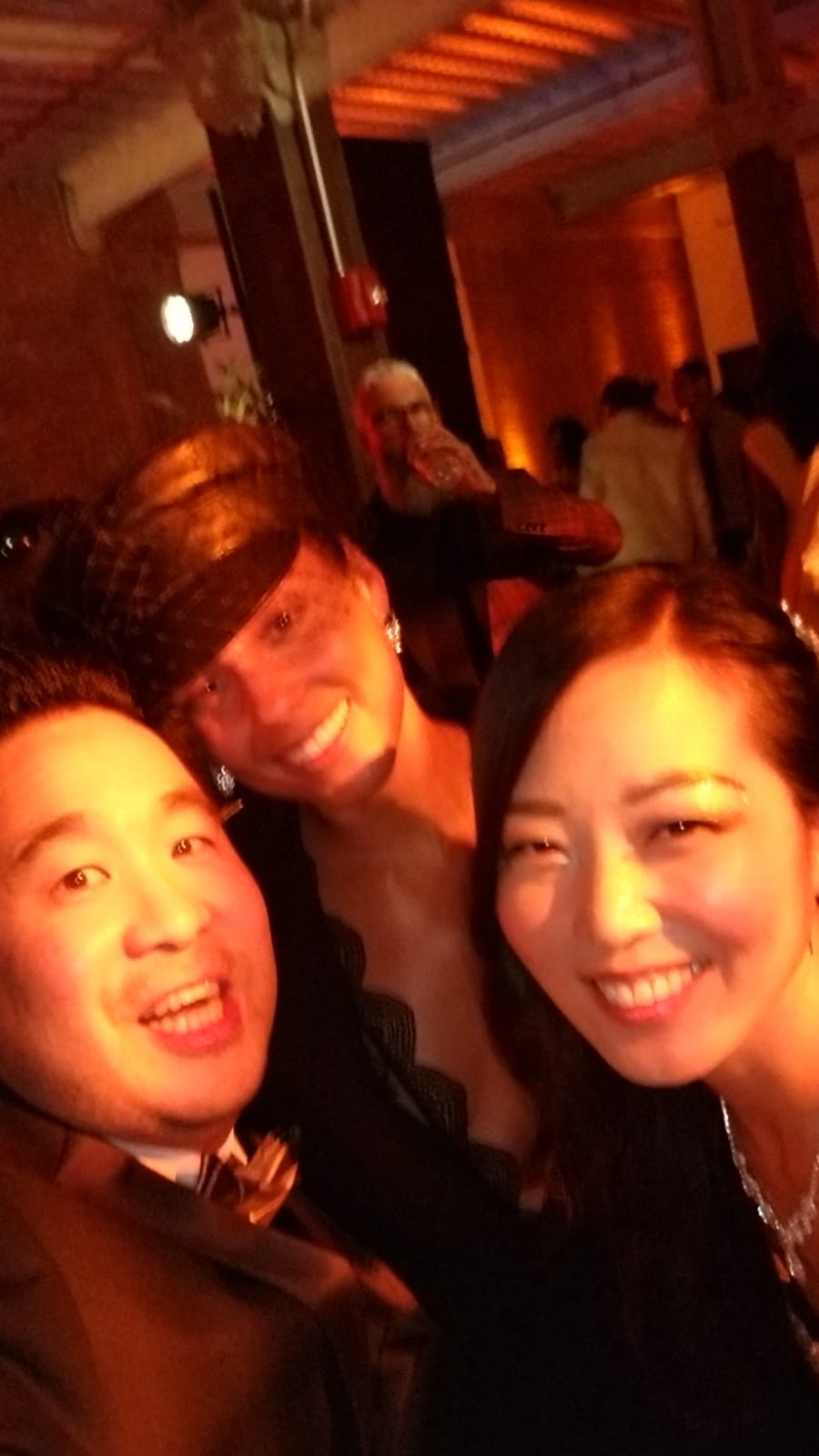
A friend had pulled me into Swizz Beatz's 40th birthday party. If you don't know Swizz, he's one of the most decorated producers in hip hop, married to a woman you probably do know, and capable of filling a room with more talent per square foot than most Grammy afterparties. I wasn't there to work anything. I was there as a guest of a guest. My wife was with me and she was, to be blunt, far more excited than I was about the guest list.
Then Alicia Keys walked in. And I want to be really precise about what I mean by that, because I'm not writing this to tell you I met a celebrity. I'm writing this because of what actually happened in the room.
She didn't announce herself. She didn't work the room. She wasn't loud. She walked in with her husband, smiled at the people she knew, hugged a few of them, and the atmosphere — the literal temperature of the room — went up. People stood a little taller. The conversations got a little warmer. The music somehow felt a little better. It was not a crowd that was easily impressed — half of them had walked red carpets — and still, the energy shifted the moment she was in the room.
The room didn't get better because a famous person walked in. The room got better because a warm person walked in who happened to also be famous.
My wife still talks about that night. I still think about it too, but for a completely different reason. Because somewhere between the second drink and the toast for Swizz, I had one of those quiet moments where a business principle I'd been circling around for years finally clicked into place.
Presence is a skill. Positive energy is a discipline.
I've spent my career around founders, CEOs, public company directors, and turnaround operators. Some of them had enormous titles and no presence. Some of them had no title and walked into a room and made it better. The second group is much, much rarer than the first, and it has nothing to do with how loud, tall, attractive, or credentialed anyone is. It has to do with what they are radiating before they open their mouth.
What I watched Alicia do at that party is what I now believe the best leaders do in every setting — boardroom, town hall, one-on-one, investor pitch, all-hands. They arrive with their energy already decided. They don't let the room decide it for them. They choose warmth over cool, interest over indifference, generosity over guardedness — before they even step inside.
Most people do the opposite. They walk into a room and let the mood of the room wash over them. If the room is anxious, they become anxious. If the room is transactional, they become transactional. If the room is gossipy, they participate. Most leaders are mirrors. The rare ones are sources.
Three things I took back to work on Monday
I want to be useful here, not just reflective, so let me give you what I actually changed in my own operating rhythm after that night. It's not complicated. That's the point.
1. Decide your energy before you cross the threshold
Before every important meeting, I now give myself a 30-second beat in the hallway or the parking lot and ask one question: what does this room need me to bring? Sometimes the answer is calm. Sometimes it's urgency. Sometimes it's warmth. Whatever it is, I decide it before I walk in. I don't let the room set the temperature for me. I set the temperature for the room.
2. Greet the people who don't have status first
One of the things I watched Alicia do that night was acknowledge the staff. The bartender. The person holding the door. Not performatively. Quickly. Naturally. Completely. This is something I've seen from almost every person I respect in operator circles, and almost never from people who are trying to look important. If you want to know who someone actually is, watch how they greet the person who can do nothing for them.
3. Stop confusing intensity with presence
I spent a lot of years as a younger operator thinking presence meant intensity. Cut through. Drive. Speed. That is one kind of presence, and it has its place, especially in a turnaround. But warmth-presence — the kind that makes a room lean toward you instead of brace against you — is a much more expensive long game, and it is what actually compounds over a 30-year career. Intensity gets you the first meeting. Warmth gets you the call six months later when something has gone wrong and they need an operator they trust in the room.
Why I'm writing this on the last day of the year
It's December 31. This is a Back 9 reflection piece — the second half of life, the part where the scorecard is about quality of presence, not quantity of activity. I've written a lot this year about M&A, about 6D Global Technologies (Nasdaq: SIXD) and the lessons I carried out of that chapter, about compound growth, about hiring philosophy. Most of it was about doing.
This one is about being. Because here's what I know for sure at almost-50: the people I remember, the people I still call for advice, the people whose names make me smile when they show up on my phone — none of them got there because of what was on their business card. They got there because of what changed in the room the moment they walked in.
That is a muscle. You can train it. You start by deciding that gratitude is a discipline, that warmth is a choice, and that the next time you walk into a room, you're going to be one of the people who makes it better — whether anyone there knows who you are or not.
Your challenge
Pick one room this week. It could be a Monday leadership meeting. A family dinner. A sales call. Decide in advance — actually decide, on paper, in your head, out loud in the parking lot — what energy you are bringing. Then walk in and bring it. Notice what happens. Notice who leans in. Notice whose shoulders drop.
Then do it again the next week. And the week after. And the week after that.
Alicia didn't practice that at a Brooklyn birthday party in 2018. She practiced it for 20 years before that. Presence is not a talent. It is a discipline. And it starts the second you decide to be a source instead of a mirror.